
The Education Councillor and PP candidate for the Mayor's Office of Las Palmas de Gran Canaria, Poli Suárez, has outlined the main lines of his electoral programme on 'El Pulso' of Onda Guanche, focused on improving municipal management, cleanliness, and security, and reconnecting with the neighbourhoods.
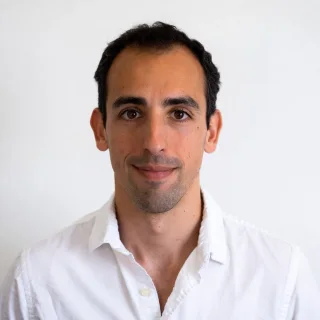
The Education Councillor of the Government of the Canary Islands and the Popular Party candidate for the Mayor's Office of Las Palmas de Gran Canaria, Poli Suárez, participated in the programme 'El Pulso' of Onda Guanche, where he detailed his project for the Gran Canaria capital ahead of the municipal elections in May 2027. Suárez, who took on the task of leading the Popular list following the proposal of the regional PP president, Manuel Domínguez; the island president, Carlos Sánchez; and the municipal spokesperson, Jimena Delgado, emphasised that the city "needs a change, a new project, closeness, and to regain the enthusiasm of its residents."
The Popular candidate identified management as the main problem of the capital's City Council. According to the data he provided during the interview, the overall execution of the municipal budget hovers around 64%, while investment execution barely reaches 38%. "The budget is the money of all citizens, and residents need to know how their taxes are spent and invested," he stated. Following management, he placed cleanliness and security as the other two major challenges for the city.
Suárez has criticised the management of the tripartite governments that have led the City Council during the last three terms, first with Augusto Hidalgo and now with Carolina Darias. In his view, Las Palmas de Gran Canaria has lost momentum and leadership, and has become associated with negative news such as dirtiness, low budget execution, conflicts with the Local Police and firefighters, or the controversy over the waste tax. "Why is Las Palmas de Gran Canaria remembered in recent years? What has it stood out for? I think for nothing," he stated.
The Popular candidate defended the need to maintain a permanent dialogue with the neighbourhoods, social groups, and municipal workers. "Sometimes politicians think we know everything and have the absolute truth. The remedy against that is dialogue," he assured. In this regard, he proposed listening to City Council staff and rectifying when necessary, in contrast to what he described as "arrogance or overconfidence" of some political leaders.
One of the concepts he used during the interview was "the behinds," referring to the neighbourhoods and areas located beyond the main showcases of the capital. Suárez acknowledged the importance of Las Canteras as "the crown jewel," but warned that behind the beach lies much more city, with history, needs, and pending problems. His project includes the construction of public housing and the rehabilitation of developments and neighbourhoods such as Schamann, Escaleritas, San Francisco, or Zárate, as well as attention to Tamaraceite, La Milagrosa, Las Torres, San Lorenzo, Piletas, Alcaravaneras, and Batán, among others.
Particularly concerning, he pointed out, is that there are still neighbourhoods without an adequate sewage network or that need to renew their water supply facilities. "We cannot talk about large projects or monumental works when, in the 21st century, we still have neighbourhoods without a sewage network. There cannot be first, second, or third-class citizens," he concluded.
Regarding major events, Poli Suárez defended that the Carnival of Las Palmas de Gran Canaria should continue to be celebrated in Santa Catalina Park, although with regulations agreed upon with the residents. The candidate acknowledged the fatigue of residents due to the concentration of numerous festive events in the same area, so he proposed better planning of the calendar and measuring the impact of each event.
Suárez insisted that he does not intend to develop this project alone, but accompanied by a team of women and men willing to work intensively for the capital. "Las Palmas de Gran Canaria needs to regain enthusiasm and be close to its neighbourhoods again," he concluded.
You may also like


