
The Minister of Territorial Policy and Democratic Memory, Ángel Víctor Torres, has assured that the Santa Cruz de Tenerife City Council's decision to study the protection of the Franco monument does not halt the removal process.
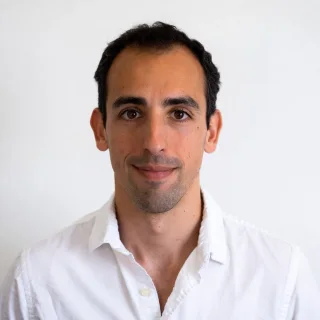
The Minister of Territorial Policy and Democratic Memory, Ángel Víctor Torres, made it clear this Monday that the Santa Cruz de Tenerife City Council will not be able to stop the removal of the Franco monument with its latest manoeuvre. The City Council announced that it will study granting the sculptural ensemble a degree of integral protection due to its supposed artistic values, a decision that, according to Mayor José Manuel Bermúdez (CC), should suspend the Ministry's removal order. However, Torres has been emphatic: “That does not stop absolutely anything.”
“We are facing a turn of a screw that can no longer hold anything,” the minister, who is from the Canary Islands, stated when asked about the meeting of the Municipal Council of Historical Heritage held this morning. For Torres, the municipal initiative is a reaction to the lack of technical support for the conservation of the sculpture. The Historical Heritage Council of the Canary Islands Government has already concluded that the monument does not meet sufficient heritage values to be declared a Cultural Asset of Interest (BIC).
“That criterion coincides with the individual and collective opinion of all the technicians of the prestigious commission of the Government of Spain,” Torres emphasized, defending that the monument constitutes “an exaltation of Francoism.” The minister questioned why the City Council did not promote that categorization earlier if it believed there were artistic values. “It is a reaction to the fact that neither the Canary Islands Government nor the Spanish Government find artistic values in the sculpture,” he added.
Torres recalled that the monument “should never have been built, because it exalts a dictator who carried out a bloody military coup and imposed fear, hatred, persecution, and disgrace.” Therefore, he insisted that it “has no historical values” and that the administrative procedure for its removal will continue. “What the City Council should do is comply with the law,” he concluded.
The controversy is framed within the application of the Democratic Memory Law, which obliges the removal of Francoist symbols from public spaces. The Franco monument in Santa Cruz de Tenerife, located on Anaga Avenue, is one of the most emblematic that still stands in Spain. The City Council, governed by a coalition of CC and PP, has tried to preserve it by arguing its artistic value, but technical reports from both the Canary and state governments contradict this.
For the residents of the Tenerife capital, the removal of the monument would represent a further step in aligning public space with democratic values. The controversy has reignited the debate on historical memory in the Islands, where remnants of Francoism still exist in several towns. Torres has assured that the ministry will proceed with the file and will not allow “dilatory manoeuvres” to prevent compliance with the law.
The minister has reminded that the deadline for removal has already expired and that the City Council is exposed to sanctions if it does not comply with the order. “There is no turning back,” Torres concluded, urging the City Council to “stop looking for excuses” and proceed with the removal of the monument.
You may also like


